GUNNISON SAGEBRUSH ALLIANCE
  • HOME
  • About Us
  • Knowing Cheatgrass
  • GET INVOLVED
    • The Group
    • Projects and Events
    • Fund a Project
  • RESOURCES
  • Contact
MANAGING CHEATGRASS TO PROTECT
THE GUNNISON SAGEBRUSH ​ECOSYSTEM
​

Cheatgrass Coordinator Position

Position description.  ​GUNNISON BASIN-WIDE CHEATGRASS AND HABITAT RESTORATION COORDINATOR
SCOPE OF WORK AND POSITION APPLICATION
 
The Cheatgrass and Habitat Restoration Coordinator (hereafter, “Coordinator”) will work closely with Project Team members to design and implement on-the-ground cheatgrass treatments and sagebrush restoration treatments across the Upper Gunnison Basin. Specifically, they will design treatments, select locations for treatment, determine supplies needed, facilitate project logistics and serve as technical supervisor during the treatments and restoration actions.  Additionally, the Coordinator will work on native forb and shrub seed collections, finding a suitable location to grow native seed, and reseeding areas as part of an integrated pest management approach and sagebrush rangelands restoration.  The Coordinator will also work on education, outreach, and other activities to promote the prevention of further invasive species spread in the Gunnison Basin. 
 
Cheatgrass may degrade sagebrush shrublands, which are important habitats for the Gunnison sage-grouse, other wildlife species, and livestock.  These habitats are vulnerable to noxious weed invasions in many ways, including increases in exotic annual grasses, diminishing critical food supply and cover, and changes to fire frequency intervals.  Large scale, cross-boundary treatments are necessary to address cheatgrass and other noxious weed invasions to provide appropriate cover and food resources for Gunnison sage-grouse, other wildlife species, and livestock. 
 
This work is in partnership with federal, state, and local land management agencies, in addition to other organizations including but not limited to: Bird Conservancy of the Rockies, Bureau of Land Management, Colorado Department of Transportation, Colorado Parks and Wildlife, Gunnison Basin Sage-Grouse Strategic Committee, Gunnison Conservation District, Gunnison County, Gunnison County Stockgrowers Association, Gunnison Trails, High Country Conservation Advocates, National Park Service, Natural Resources Conservation Service, Sisk-a-dee, U.S. Fish and Wildlife Service, U.S. Fish and Wildlife Service Partners for Fish and Wildlife Program, U.S. Forest Service, and Western Colorado University.
 
The overall goal of this project is to treat cheatgrass infestations and restore the sagebrush ecosystem on public and private lands across the Gunnison Basin.
 
The Gunnison Basin has a history of significant collaboration and partnership for cross-boundary endeavors, and enthusiastically supports this position; partners will assist the Coordinator to complete objectives.  Overall project objectives are to:
 
1. Collaboratively prioritize the most important sites needing treatment across the Basin, (develop and apply criteria to inform prioritization with input from numerous stakeholders, incorporate local knowledge).  This may include remote sensing and mapping of the current extent of cheatgrass in the Gunnison Basin.
 
2. Build local capacity for creating an enduring, long-standing program to continue these methods through training, volunteer base development for hand pulling events, outreach events and education programs.
 
3. Treatment objectives are to:  a) treat infestations of cheatgrass in priority areas; b) reduce the expansion of cheatgrass into new areas by public education campaigns and equipment such as bike wash and boot kick stations; c) engage in cross-boundary treatments including private lands; and d) use an integrated pest management approach, such as reseeding appropriate sites post-treatment.
4. Develop a long-term monitoring program to determine ecological response to the restoration project activities and to help determine if adaptive management is needed.
 
5. Keep up to date on effective techniques, best practices, and current research for cheatgrass treatment, sagebrush restoration, and collaborative conservation.
 
6. Share tools, methods, and findings with other groups working to conserve vulnerable sagebrush watersheds and sage-grouse populations in similar ecosystems.
 
7. Secure additional funding for projects and future capacity via grant applications.
 
8. Recruit, coordinate, and oversee contractors completing cheatgrass treatments and sagebrush restoration. 
 
Tasks and Timeline: Coordinator (estimated time in parentheses; note dates subject to change pending weather):
The details of the tasks and work plan will be finalized in collaboration with stakeholders.
Stakeholders will work with the Coordinator on priority project areas.  The Coordinator will conduct field work and provide written summary of project design treatments, including identifying problems, developing objectives, characterizing the treatment site, determining locations, treatment methods, estimating materials needed, estimating costs of materials, and documenting details using GPS starting in April/May/June, depending on weather. 
 
Ensure and oversee the timely application of herbicides in June – November.  Herbicide applications may be with a combination of contractors, agency workforce, and Western Colorado Conservation Corps or similar.  The Coordinator will plan and implement multi-agency, cross-boundary cheatgrass treatments and potentially leverage and coordinate with agencies completing other noxious weed treatments. 
Investigate additional treatment opportunities, including cultural and mechanical practices, fertilizers, bio-control, and other aspects of an integrated pest management approach.
 
Coordinate community activities such as seed collections, reseeding to restore sites, and hand-pulling cheatgrass to promote an integrated pest management approach. Community activities may be completed as opportunities arise.
 
Establish baseline and repeat measurements with assistance from stakeholders, and provide summary, data interpretation, and preliminary results.  Monitoring will use the best available science on how to collect relevant measures of cheatgrass density and abundance.  Field work will occur April through November as appropriate and as conditions allow, and analysis and reports will be completed in November through March.
 
Grant applications will be completed as opportunities arise throughout the year, or at other times as appropriate, to secure funds for projects and capacity.  Applications will be completed in coordination with stakeholders.
 
Host and organize quarterly meetings for stakeholders to discuss next steps, priorities, and accomplishments.  Prepare a progress report available to stakeholders at meetings such as the Gunnison Basin Sage-grouse Strategic Committee (GBSGSC) and will serve as chair of the Cheatgrass Sub-committee.  The Cheatgrass Coordinator will also potentially be appointed to the GBSGSC, and serve on the Gunnison Basin Weed Commission, and other relevant meetings.  Coordinate with other county governments on weed treatment and road maintenance schedules to form an integrated approach. 
 
Develop and implement a proactive cheatgrass communications strategy.  Opportunities could include internal communications to stakeholders, external communications to generate a broad public understanding of the issue, talks at conferences, a multi-media approach (including social media), cheatgrass education for the public and practitioners (i.e., bringing in researchers and practitioners for webinars, talks, workshops), or partnering with Western Colorado University and other stakeholders to help create a public interface for progress reporting.  Community outreach could include K-12 school presentations (4-H, Taylor Challenge, Water Festival, Mill Creek Youth Summit, AgVenture), community pull days, a booth at the farmer’s market, Gunnison Sage-Grouse Summit or Festivals, or at local recreation events such as the Sageburner, Growler, and other permitted recreational events. 
 
Stay updated on innovations in cheatgrass management throughout the western United States.  Build partnerships with companies and conduct background research on herbicides and other treatment technologies (fertilizers, bio-control, mechanical and cultural practices, seeding, etc) and mapping techniques.  Develop and update a Best Management Practice document for this information to guide efficacy and reduce risk.
 
Recruit, train, and supervise herbicide applicators to build certified applicator capacity in personnel able to spray cheatgrass in the Gunnison Basin. 
 
Coordinate seed collections of Gunnison Basin native grasses, forbs, and shrubs such as sagebrush. 
 
Coordinate seed storage, planting, and growing operations between Colorado Parks and Wildlife and Bureau of Land Management storage facilities.
 
Coordinate seeding and planting events in post-treatment sites, tied with cheatgrass treatments and other disturbances such as road decommissioning. 
 
This position will be dynamic and evolving.  Other duties may be determined by or amended by the stakeholders and Coordinator. 
 
Recruit landowner participation in cheatgrass treatment programs (including the current USFWS BIL funds with county).  Incorporate tools such as remotely sensed maps. Conduct site assessments with landowners, schedule treatments, coordinate with applicator, and be line of communication with applicator and landowner. Write and manage contracts associated with treatment."
 
Products:
Develop a repository for project records.  Work with partners and land management agencies to capture and/or assist in writing pre-project implementation plan(s) documenting objectives and rationale, methods and treatment types, monitoring and assessment methods (e.g. photo points, vegetation sampling, etc.), GPS locations and spatial data (e.g. shapefiles and geo-databases for infestations and treatment areas), supplies needed, timelines, and project participants (agencies and contractors involved including contractor bids) to prepare for field implementation.  Ensure appropriate environmental clearances (e.g. NEPA) has been documented. 
 
Summarize results with an annual report and public communications.  Analyze monitoring data to make recommendations for future work.  Include information and education campaigns, summary of sites, treatment design, monitoring program protocol and results, lessons learned.
 
Create and regularly maintain database of certified applicators and other contractors willing to work on cheatgrass projects in the Gunnison Basin.
Track accomplishments and monitoring data in the Gunnison Sage-Grouse Conservation Efforts Database (CED).  Facilitate the addition of treatment data from other agencies.  Input data annually. 
 
Required Skills and Experience:
Demonstrated ability to listen to and work with multiple stakeholders to successfully complete projects. 
Demonstrated communication, facilitation, project management, and leadership skills.
Experience coordinating and executing meetings with actionable outcomes. 
Knowledge of plant biology, and ecology.
Knowledge of and experience with chemical herbicides and their application.
Knowledge of and experience with vegetation monitoring methods and techniques, how to set up a monitoring program, and how to analyze monitoring data. 
Demonstrated experience with grants, such as writing, disbursing and using grant funds, and meeting grant tracking and reporting requirements.
Experience using GIS to create geo-databases, shapefiles, and inventory databases.
Experience coordinating and organizing volunteers and events
Experience working with, recruiting, and communicating with private landowners and implementing restoration/conservation on private lands.
 
Preferred Skills and Experience:
A State of Colorado’s Department of Agriculture Qualified Supervisor license.  If the applicant does not currently have a Qualified Supervisor license, they must be willing to obtain a reciprocal license or work towards obtaining a Certified Operator license within one year of being hired for the position, and subsequently a Qualified Supervisor license.
Experience using GIS and other mapping applications to track herbicide applications and projects for reporting. 
Knowledge of sagebrush restoration.
Project management experience that includes developing and implementing budgets, overseeing contracts, and adapting project goals as needed.
 
Compensation will be dependent on experience ($85,000 to $105,000).  However, this is a one-year contract position, with intent for renewal.  The contractor will be expected to provide:
A 4x4 vehicle.  Mileage reimbursements will be covered.  A vehicle lease or long-term alternative may possibly be secured through one of the land management agency partners, although not guaranteed. 
Computer with appropriate software (e.g., ESRI ArcGIS, Microsoft Office suite).
Worker’s Compensation Insurance in accordance with Colorado and Federal law.
Comprehensive General Liability Insurance. 
Comprehensive automobile liability insurance on all vehicles used in the Services.
All personal health insurance, disability insurance, retirement contributions, etc.


For questions about the contract, please contact             
Gunnison County Human Resources
                                                          200 E Virginia Avenue
                                                          Gunnison, Colorado 81230
                                                          970-641-7618
                                                          [email protected]
 
For questions about the position and/or to apply, please contact
                                                          Patrick Magee!
                                                          Western Colorado University
                                                          [email protected]
                                                          970-641-3959
 
To apply for the position, send an email with your resume and cover letter to Patrick! at the email address above. 
 
Deadline to apply:  September 26, 2024
Start Date:  November 1, 2024 (with some flexibility)

CALL TO ACTION

Picture
Cheatgrass invasion in the Gunnison Valley poses an immediate and growing concern. Its aggressive and rampant expansion throughout Western Colorado threatens sagebrush landscapes. From altered fire regimes to habitat loss to decreased forage, cheatgrass infestation threatens our ecosystems, economies, and heritage. Many sagebrush landscapes of the West have been converted to cheatgrass monocultures, but the relatively early phase of invasion in the Gunnison Basin means there is still time to address this threat swiftly and decisively. Do your part and help us protect our public lands for the present and the future. Get involved in the fight against cheatgrass!
GET INVOLVED

GET YOUR PRIVATE LAND TREATED FOR FREE!

With the new Bipartisan Infrastructure Law (BIL), the Gunnison Basin received funding for cheatgrass and sagebrush restoration treatments on private land. This means for a limited time, you could have your land treated for cheatgrass or reseeded for FREE. Contact Petar Simic, Gunnison County's Habitat Restoration and Cheatgrass Coordinator at [email protected] or 248-881-6982 for more information.

the 2023 cheatgrass pull day was a success

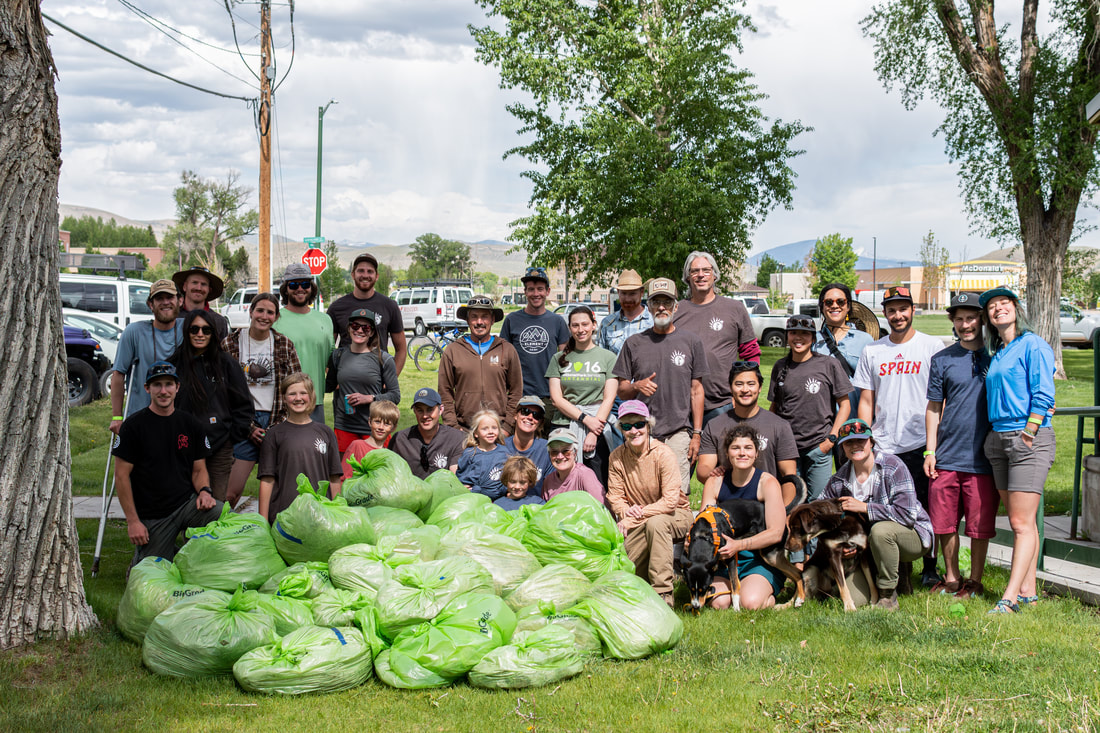
About 35 people came out to the 2023 City of Gunnison Cheatgrass Pull Day on June 10th. We pulled 605 pounds of cheatgrass and celebrated with free t-shirts, Mario's pizza, beverages, live music, and games. Join us next year! There is still plenty of cheatgrass to be pulled.
Picture

About gb-sea 

Picture
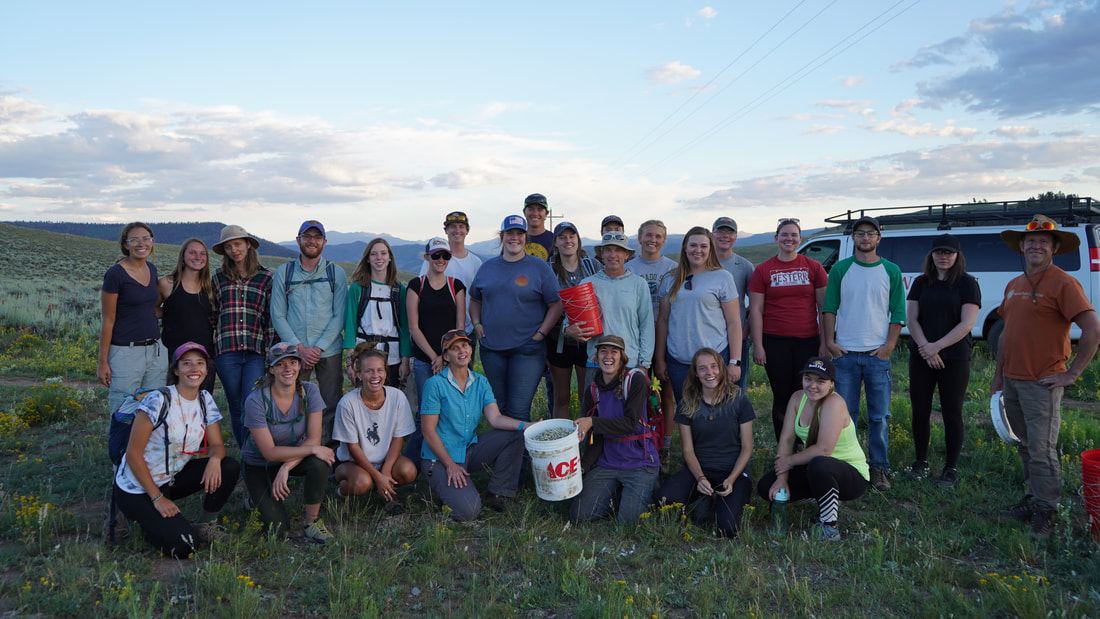
Compelled by the serious threat of cheatgrass, community members, university scientists and natural resource agency employees have come together to form an active coalition. GB-SEA's goal is to educate practitioners and the public on necessary and imperative actions the community can take in combating cheatgrass including sharing Integrated Pest Management (IPM) best practices, facilitating seminars and workshops, and coordinating restoration efforts. Comprised of individuals from diverse backgrounds, this group aims to delineate the most effective practices to prevent cheatgrass expansion in the Gunnison Basin.
Involved Organizations
Basin on the Brink
​

Basin on the Brink from Sam on Vimeo.

Watch the Basin on the Brink video created by Sam Liebl. Featuring local experts from Western Colorado University,  federal public land managers, and passionate residents. This video provides a in depth exploration of cheat grass and how it affects the Gunnison valley. The future of the Gunnison sage-grouse relies on our understanding of sage and how cheat grass harms these habitats.


Why the Gunnison Valley

Picture
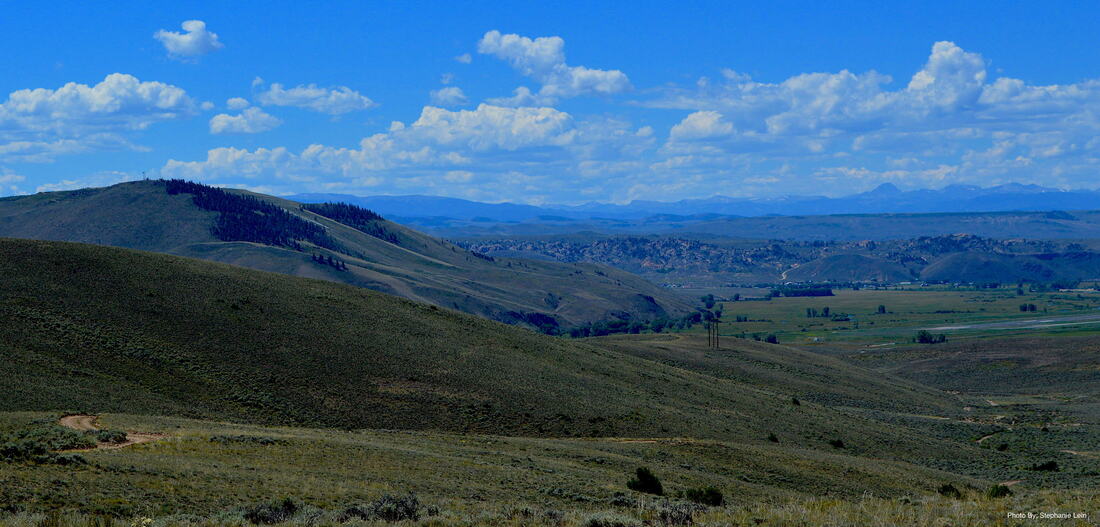
Gunnison County, Colorado is roughly 80% public land. The majority of the local economy is dependent of public lands. The sagebrush ecosystem dominates much of this landscape.  Across the Western slope of Colorado the invasive grass from Eurasia, cheatgrass (Bromus tectorum), has invaded public and private lands and converted diverse ecosystems to homogeneous stands of this non-native grass.  The invasion of the Gunnison Basin is in the early stages and the time for action is now. Removal of growing stands of cheatgrass and maintaining and restoring a healthy understory will ensure protection and resilience of the sagebrush ecosystem. 
Learn More
Picture
Powered by Create your own unique website with customizable templates.
  • HOME
  • About Us
  • Knowing Cheatgrass
  • GET INVOLVED
    • The Group
    • Projects and Events
    • Fund a Project
  • RESOURCES
  • Contact